
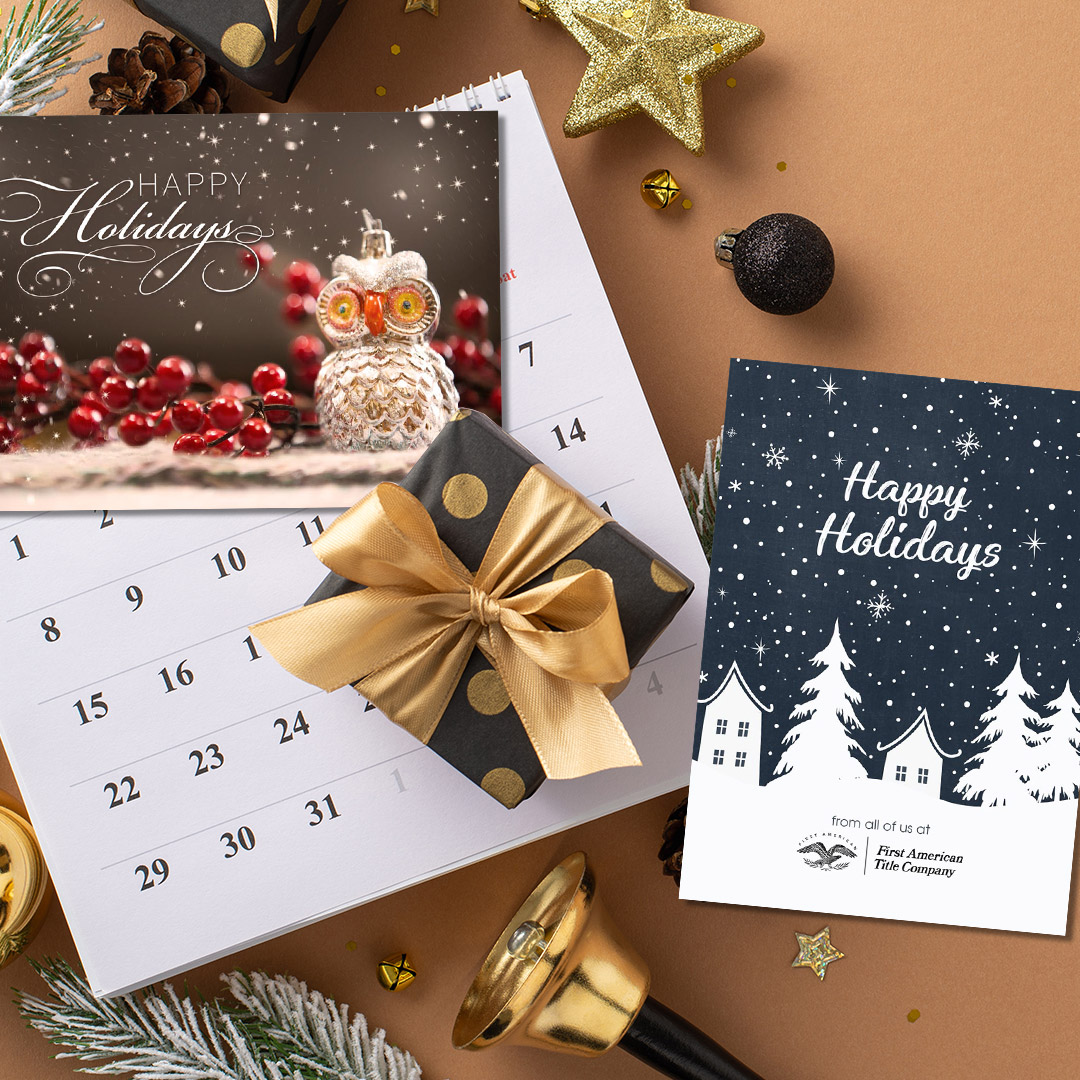
A well-planned business greeting card strategy turns simple touchpoints into meaningful relationship builders — strengthening client loyalty, improving employee engagement, and supporting long-term brand growth.
We’re here to help you map out a 12-month greeting card plan that aligns with sales cycles, successful HR initiatives, and your strongest marketing campaigns.
Here’s how to build a smart, scalable strategy for 2026.
Why a 12-Month Business Greeting Card Strategy Matters
A proactive plan allows your organization to:
- Consistently strengthen client relationships
- Support sales and account management efforts
- Increase employee recognition, retention, and productivity
- Align direct mail marketing with campaign goals
- Reduce rush fees and last-minute production stress
- Maximize savings with bulk custom greeting cards
Rather than treating corporate greeting cards as occasional gestures, think of them as structured relationship assets, incorporating them as an essential component in your year-over-year strategy.
Step 1: Define Your Objectives
Before selecting designs or messaging, clarify your goals.
Are you trying to:
- Improve client retention?
- Increase referral activity?
- Support account-based marketing?
- Boost employee morale?
- Strengthen brand visibility?
Each objective influences the timing, tone, and format of your corporate greeting cards.
For example:
- Sales teams may prioritize quarterly client appreciation cards.
- HR teams may focus on employee recognition cards and milestone celebrations.
- Marketing teams may align greeting cards with seasonal campaigns.
Step 2: Map Key Touchpoints Across the Year
Below is a sample 12-month framework many organizations use.

Q1: Relationship Building & Appreciation
- New Year appreciation cards for clients
- Employee recognition cards following year-end performance reviews
- Valentine’s Day appreciation cards (clients or staff)
- Post-project thank you cards
Goal: Start the year with gratitude and visibility.
Q2: Growth & Engagement
- Spring client reconnect cards
- Referral thank you cards
- Administrative Professionals Day cards
- Graduation announcements (for education, nonprofit, or family-focused brands)
Goal: Re-engage dormant accounts and encourage referrals.
Q3: Mid-Year Retention
- Independence Day themed client touchpoints
- Back-to-business appreciation cards
- Company anniversary acknowledgments
- Employee milestone recognition cards
- Birthday cards and a subsequent discount
Goal: Maintain connection during quieter sales periods.
Q4: Peak Visibility & Holiday Impact
- Thanksgiving appreciation cards
- Holiday cards for businesses
- Year-end gratitude messaging
- Vendor and partner recognition
Goal: Reinforce loyalty before the new fiscal year begins.
Step 3: Segment Your Audience
Not all recipients should receive the same card.
Segment your outreach into:
Clients
- VIP / top revenue accounts
- Long-term clients
- New customers
- Lapsed clients
Employees
- Leadership
- Remote staff
- Sales teams
- Milestone anniversaries
Partners & Vendors
- Referral sources
- Strategic partners
- Community collaborators
Audience segmentation ensures your business greeting card strategy feels intentional, not generic.
Step 4: Choose the Right Card Types
A strong annual plan includes a mix of formats.
1. Thank-You & Client Appreciation Cards
Short, sincere, and professional. These reinforce loyalty and referrals.
2. Employee Recognition Cards
Celebrate promotions, anniversaries, achievements, and team wins.
3. Holiday Cards for Businesses
Year-end visibility remains one of the highest-impact opportunities for brand reinforcement.
4. Event & Milestone Announcements
Company anniversaries, product launches, relocations, or expansions.
By planning ahead, you can order bulk custom greeting cards for recurring needs and customize messaging throughout the year.
Step 5: Align With Sales & Marketing Campaigns
Your greeting card program should not operate in isolation.
Coordinate with:
- Account-based marketing initiatives
- Customer retention campaigns
- Referral programs
- Direct mail marketing pushes
- Trade show follow-ups
For example:
After a major product launch, send a follow-up appreciation card to early adopters.
After closing a significant deal, send a handwritten-style thank-you from the sales team.
When integrated with broader marketing efforts, corporate greeting cards become measurable relationship tools.
Step 6: Plan Production & Budget Strategically
A 12-month strategy reduces costs and increases efficiency.
Benefits of Planning Ahead
- Volume discounts on bulk custom greeting cards
- Brand consistency across designs
- Faster turnaround for recurring campaigns
- Simplified approval processes
- Better budget forecasting
Rather than placing multiple small orders throughout the year, consider ordering base inventory with customizable messaging options.
Step 7: Personalization Without Overcomplication
Personalization increases response rates — but it must remain scalable.
Effective personalization options include:
- Company logo placement
- Brand colors
- Custom inside messaging
- Printed signatures
- Handwritten-style fonts or brand-focused typography
- Return address printing
- Stylish accents, like foil and embossing
- Envelope upgrades
For VIP accounts, consider limited handwritten notes layered onto professionally printed cards.
The goal is to balance authenticity with operational efficiency.
Step 8: Create a Messaging Framework
Instead of rewriting copy each time, build a messaging library.
Categories may include:
- Gratitude
- Partnership appreciation
- Milestone celebration
- Holiday well-wishes
- Referral thanks
- Employee recognition
Having pre-approved language accelerates execution while maintaining brand voice.
Step 9: Measure Impact
Even traditional formats like greeting cards can be tracked.
Consider measuring:
- Referral increases after appreciation mailings
- Account retention rates
- Repeat purchase behavior
- Employee engagement feedback
- Direct responses or thank-you acknowledgments
- QR code usage
When viewed through a relationship marketing lens, greeting cards become part of your measurable retention strategy.
Step 10: Work With a Strategic Print Partner
Executing a 12-month business greeting card strategy requires more than selecting designs. It requires:
- Reliable production timelines
- Custom branding options
- Consistent quality
- Scalable personalization
- Flexible ordering
- Budget-friendly bulk pricing
A true print partner helps you plan proactively, not reactively.
Your 12-Month Business Greeting Card Calendar
| Month | Focus |
| January | Client appreciation & employee recognition |
| February | Valentine’s appreciation & referral thanks |
| March | Spring reconnect campaign |
| April | Administrative recognition |
| May | Graduation announcements & milestone cards |
| June | Mid-year client appreciation |
| July | Seasonal brand touchpoint |
| August | Employee milestone recognition |
| September | Fall reconnect campaign |
| October | Early holiday card planning |
| November | Thanksgiving appreciation |
| December | Holiday cards for businesses |
This framework can be adapted to your industry and sales cycle.
The Long-Term Advantage of a Greeting Card Strategy
Businesses that commit to consistent relationship touchpoints outperform those that rely solely on digital communication.
A structured business greeting card strategy:
- Builds emotional connection
- Reinforces brand credibility
- Keeps your company top-of-mind
- Supports client retention
- Encourages referrals
- Strengthens company culture
When thoughtfully executed, corporate greeting cards are not an expense — they are an investment in durable relationships.
Build Your 12-Month Plan With Confidence

Planning ahead ensures your outreach remains intentional, professional, and aligned with your business goals.
Whether you’re coordinating client appreciation cards, employee recognition cards, or holiday cardsfor businesses, a year-long approach delivers measurable impact and operational efficiency.
Explore customizable, bulk-friendly options designed to support your entire annual strategy — and build stronger relationships all year long.